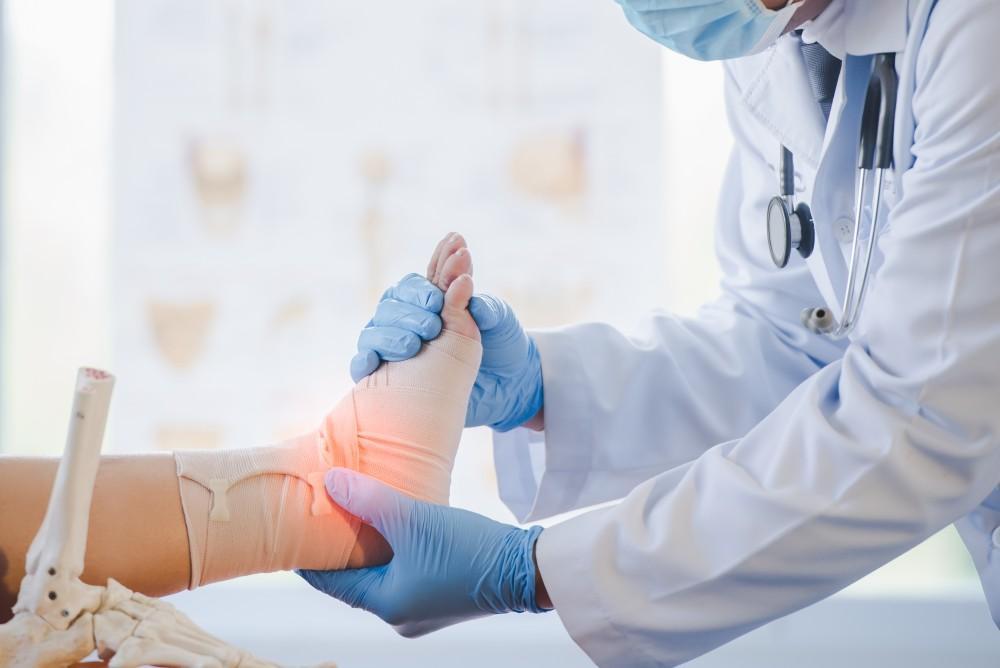
Permanent Bunion Relief and Faster Recovery with 3D Bunion Correction
Frustrated by bunion pain? Learn how the experts at Foot and Ankle Institute of Colorado in Colorado Springs, CO, use advanced 3D bunion correction to restore your mobility.
Your midfoot plays a critical role in every step you take, acting as a supportive arch that absorbs shock and transfers body weight from your heel to your toes. When you suffer a Lisfranc injury — a fracture or dislocation affecting the complex joint and ligaments connecting your tarsal and metatarsal bones — the stability of your entire foot is compromised.
Because the Lisfranc joint bears tremendous mechanical stress, severe fractures rarely heal well with simple immobilization. Surgical repair is often necessary to realign the bones, secure the torn ligaments, and prevent long-term complications like chronic instability or post-traumatic arthritis.
At Foot and Ankle Institute of Colorado in Colorado Springs, Colorado, podiatrists and foot and ankle surgeons Matthew Hinderland, DPM, Jordan Cameron, DPM, Trevor Whiting, DPM, and Shane Soto, DPM, specialize in advanced treatment for complex foot and ankle fractures. If you are preparing for or recovering from Lisfranc surgery, knowing what lies ahead can help you navigate your healing journey with confidence.
The Lisfranc joint consists of bones and ligaments that fit together tightly like the stones in a Roman arch. If one piece shifts out of alignment, the entire arch can collapse.
During surgery, our surgeons perform an open reduction and internal fixation (ORIF) or, in severe joint-crushing cases, a targeted midfoot fusion. Using small plates, screws, or specialized hardware, we restore anatomic alignment so the bones and ligaments can knit back together securely.
According to the American College of Foot and Ankle Surgeons (ACFAS), precise anatomic reduction is the single most important factor in achieving successful long-term outcomes and preventing chronic midfoot pain.
Recovering from Lisfranc surgery is a gradual process that cannot be rushed. Protecting the surgical site while the bones and soft tissues fuse is essential:
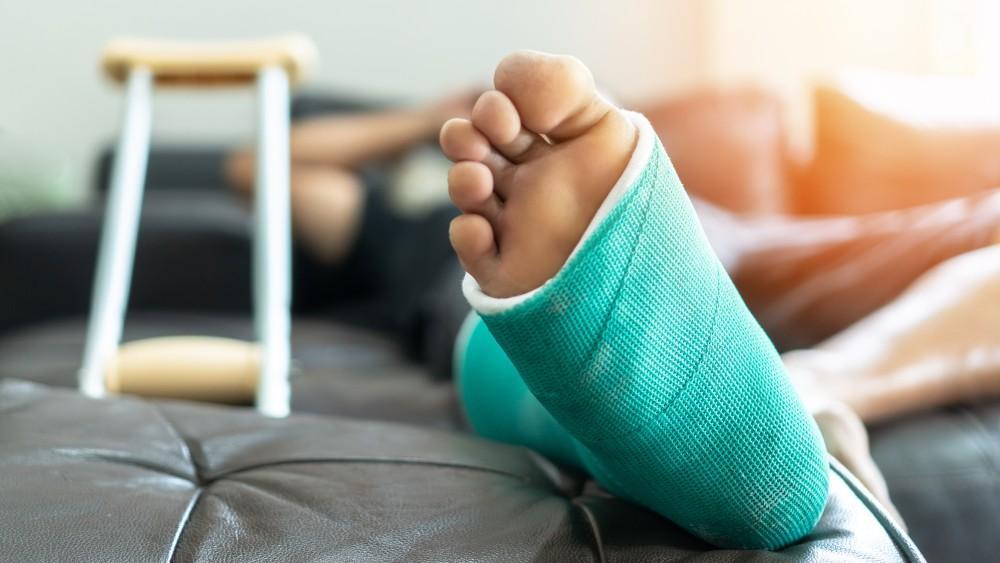
Immediately following surgery, your foot will be placed in a protective splint or cast. During this crucial initial phase, you must keep 100% of your weight off the foot. You will use crutches, a knee scooter, or a walker to get around. Keeping your foot elevated above heart level helps reduce post-surgical swelling and throbbing.
After follow-up digital imaging confirms the bones are consolidating, your cast is typically replaced with a removable rigid walking boot. Under your surgeon's guidance, you will begin partial, protected weight-bearing, gradually increasing the amount of pressure you place on your heel and midfoot.
Once full bone union is achieved, you will transition out of the boot and into supportive, stiff-soled athletic shoes. Structured physical therapy begins to restore ankle mobility, rebuild calf strength, and retrain your balance and gait mechanics.
Most patients resume normal daily walking and low-impact activities within six months, though high-impact athletics or demanding physical labor may take up to a year. In some cases, temporary hardware like screws may be removed during a minor secondary procedure around four to six months post-op.
Patience and strict adherence to your post-operative protocol are the keys to a smooth recovery. To ensure the best possible outcome:
Putting weight on your foot before your surgeon gives clearance can bend hardware, loosen screws, or re-displace the healing joint.
Swelling in the midfoot can linger for up to a year. Continuing to elevate your foot after active days and wearing light compression socks can keep swelling in check.
After your foot heals, custom orthotics are often recommended to distribute weight evenly across your midfoot, relieving stress on the surgical site during running or walking.
A Lisfranc injury is a serious condition, but with skilled surgical intervention and dedicated rehabilitation, you can get back on your feet and return to an active lifestyle.
If you suspect you have suffered a midfoot injury or need a comprehensive surgical evaluation, our team is here to guide you every step of the way. Call Foot and Ankle Institute of Colorado at 719-488-4664, or use our online booking feature to schedule your consultation today.